
Sea LCL Groupage vs Air Freight for Excess Baggage
What Is Sea LCL Groupage?
Sea LCL (Less than Container Load) groupage allows you to ship smaller cargo volumes by sharing container space with other shipments. This method is ideal for cost-conscious senders who don’t need a full container.
- Cost-effective for non-urgent shipments
- Ideal for bulky or heavy items
- Access to global shipping routes
Typical Timeframe: 30–40 days door-to-door, depending on origin and destination.
What Is Air Freight for Excess Baggage?
Air freight is the fastest method for sending goods internationally. It’s perfect for urgent or high-value shipments, offering speed and reliability.
- Fast delivery: 5–10 days
- Reliable scheduling with minimal handling
- Best for small, urgent shipments
Price Comparison: Sea LCL Groupage vs Air Freight for Excess Baggage
Here’s a real-world example comparing the two methods for a 3–4 CBM shipment of excess baggage:
| Shipping Method | Base Rate | Hidden Fees | Total Landed Cost | Transit Time |
|---|---|---|---|---|
| Air Freight | $2,000 | Minimal | ~$2,000 | 5–10 Days |
| Sea LCL | $300 | CFS, drayage, customs | ~$1,700 | 30–40 Days |
Insight: Sea LCL is cheaper upfront, but hidden fees can narrow the gap. Air freight is faster and more predictable.
When to Choose Sea LCL Groupage
Sea freight is ideal for:
- Non-urgent shipments
- Bulky or heavy items
- Cost-sensitive customers
- Relocations with flexible timelines
Use Cases: Furniture, household goods, commercial samples, long-term travel.
When to Choose Air Freight
Air freight is best for:
- Urgent deliveries
- High-value or fragile items
- Shipments under 3 CBM
- Business-critical timelines
Use Cases: Electronics, documents, last-minute baggage, e-commerce orders.
Hidden Costs to Watch Out For
Sea LCL
- CFS (Container Freight Station) fees
- Drayage and inland transport
- Customs handling and clearance
- Storage fees for delays
Air Freight
- Fuel surcharges
- Security fees
- Volumetric weight charges
Tip: Always request a full landed cost quote to avoid surprises.
Sustainability and Carbon Footprint
Sea freight is significantly more eco-friendly than air freight:
- Sea Freight: ~10–40 grams CO₂ per ton-km
- Air Freight: ~500–600 grams CO₂ per ton-km
Quick Comparison Table
| Factor | Sea LCL Groupage | Air Freight |
|---|---|---|
| Cost | ✅ Lower base rate | ❌ Higher base rate |
| Speed | ❌ 30–40 days | ✅ 5–10 days |
| Shipment Size | ✅ Best for 3–10 CBM | ✅ Best for <3 CBM |
| Urgency | ❌ Not suitable | ✅ Ideal |
| Fragility | ❌ More handling | ✅ Less handling |
| Sustainability | ✅ Lower emissions | ❌ Higher emissions |
Conclusion
Choosing between Sea LCL and Air Freight depends on your priorities. If cost is key and time is flexible, Sea LCL is your best bet. If speed and reliability matter most, Air Freight is worth the investment.
Need help deciding? Contact our freight experts for a tailored quote and guidance.
Excess Baggage Transport Regulations in South Africa
Excess baggage transport plays a crucial role for travellers, students, relocating families, and businesses moving personal effects across South Africa or internationally. Whether you’re flying out of OR Tambo, Cape Town International, or King Shaka, understanding the regulations around excess baggage helps you avoid delays, penalties, and unexpected costs. South Africa follows a structured set of rules governed by airlines, customs authorities, and international transport standards to ensure safe and compliant movement of personal goods.
What Counts as Excess Baggage?
Excess baggage refers to any luggage that exceeds an airline’s standard weight, size, or quantity limits. Most airlines operating in South Africa allow between 20kg and 30kg of checked luggage, depending on the route and ticket class. Anything beyond this allowance is classified as excess and may be charged per kilogram or per additional piece. Travellers with large volumes often choose dedicated excess baggage transport services, which offer more affordable rates than airline penalties.
Airline Regulations
Each airline sets its own excess baggage fees and restrictions. Common rules include:
- Weight limits per bag, usually capped at 32kg for safety reasons.
- Oversized baggage fees for items exceeding standard dimensions.
- Special handling requirements for sports gear, musical instruments, and fragile items.
- Advance booking discounts, as pre-booked excess baggage is often cheaper than paying at the airport.
Travellers are encouraged to check airline policies before departure, as fees vary widely between domestic and international routes.
Excess Baggage Shipping Services
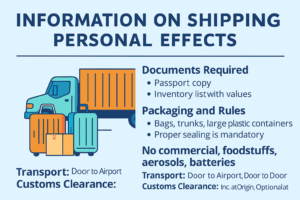
For travellers with large quantities of personal effects — such as students relocating, families emigrating, or tourists returning home with extra goods — excess baggage shipping companies offer a practical alternative. These services typically provide:
- Door-to-door collection
- Secure packaging and weighing
- Air or sea freight options
- Customs documentation assistance
- Tracking and delivery confirmation
This method is often more cost-effective than paying airline excess fees, especially for shipments over 50kg.
Customs Regulations in South Africa
All excess baggage entering or leaving South Africa must comply with customs rules. Key requirements include:
- Accurate item declarations to avoid penalties or delays.
- Compliance with prohibited and restricted goods, including food, plants, chemicals, and high-value electronics.
- Duties and VAT which may apply to new or high-value items entering the country.
- Supporting documents such as invoices, packing lists, and passports for personal effects.
Travellers returning to South Africa may qualify for duty-free allowances, but only within specific value limits.
Safety & Security Regulations
South Africa’s airports and freight terminals follow strict safety protocols. Excess baggage must:
- Be screened through security scanners
- Avoid prohibited items such as flammables, aerosols, and lithium batteries (unless properly declared)
- Be packed securely to prevent damage or leakage
- Include clear labelling with the traveller’s name and contact details
Failure to comply may result in confiscation or refusal of transport.
Why Use Professional Excess Baggage Services?
Professional baggage transport companies offer predictable pricing, expert handling, and full compliance with airline and customs regulations. This ensures a smoother travel experience, especially for travellers carrying large volumes or irregular-shaped items.
Contact Daigon Excess Baggage
Johannesburg Office: Near OR Tambo International Airport
Durban Office: Close to King Shaka Airport
Cape Town Office: Serving Cape Town International
Email: Info Mail | Phone: 087 702 2104
Contact Us for a personalized quote.
© 2025 Daigon Excess Baggage. All rights reserved.